Client pitch · HID Global
Back In After a Lost Phone
A client pitch for a retail bank's mobile app.
Losing a phone meant a long, risky path back into the bank's app. I mapped the journey and pitched a shorter, safer one.
- Role
- Product designer, end to end
- Status
- Client pitch
- Client
- A retail bank
- Platforms
- Banking mobile app
- Methods
- Storyboarding, journey mapping, How might we, concept journey
- Outcome
- A proposed journey: seven steps after download cut to three
This was a pitch to a client. The bank isn't named, and no screens were built.
Why this case matters
This case shows how I turn a brief into goals a client can weigh, before any screens. The deliverable was a journey.
Problem
The brief: let customers who lose or replace their phone get back into their bank account through the bank's app.
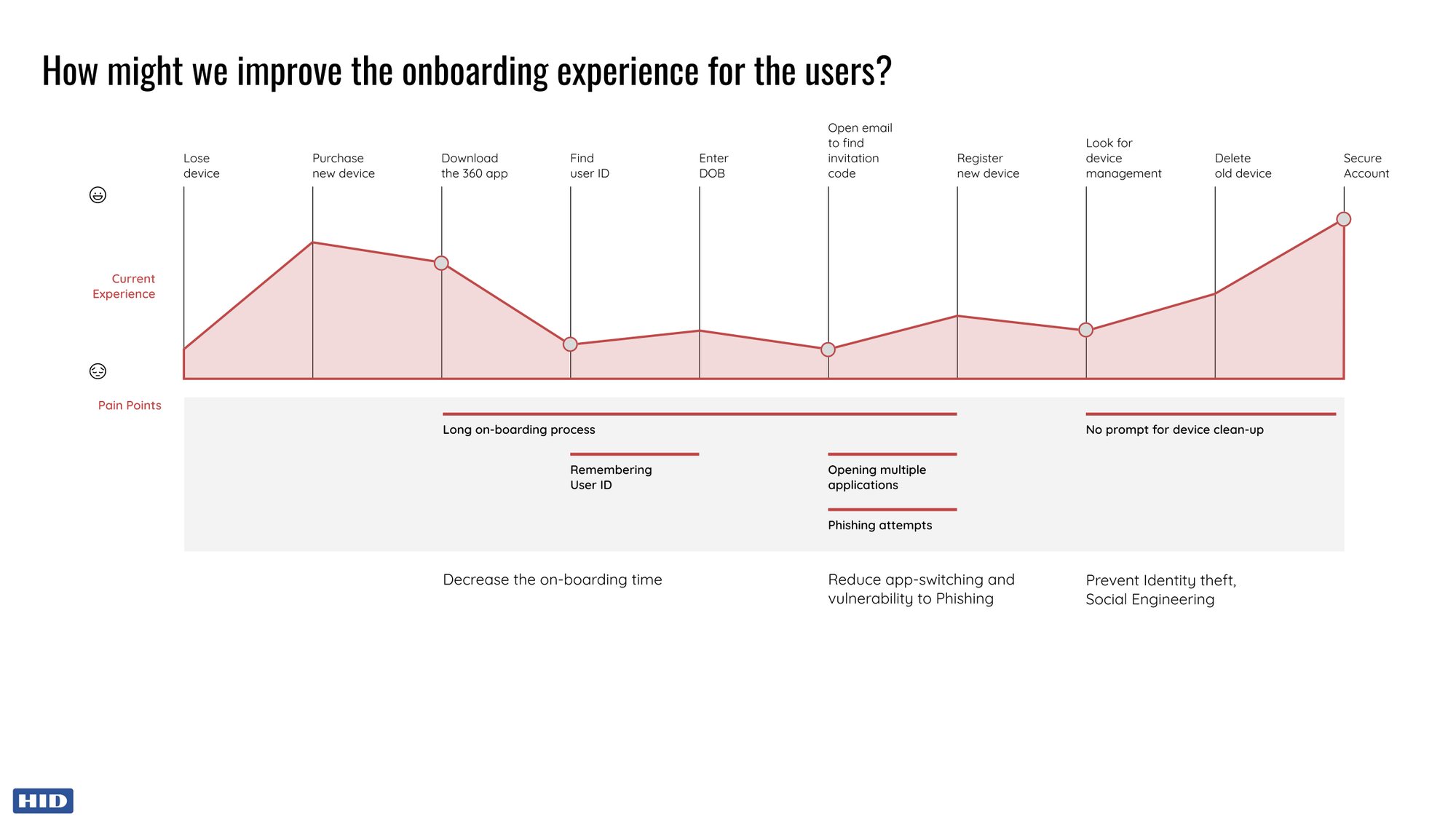
After downloading the app, customers faced seven more steps. They had to recall a user ID and enter their date of birth. Then they dug a code out of their email.
What goes wrong without it
Every app switch is a chance for phishing. And with no prompt to remove the old phone, a lost device could stay linked to the account. For the bank, that is an identity theft risk on every lost phone.
Research
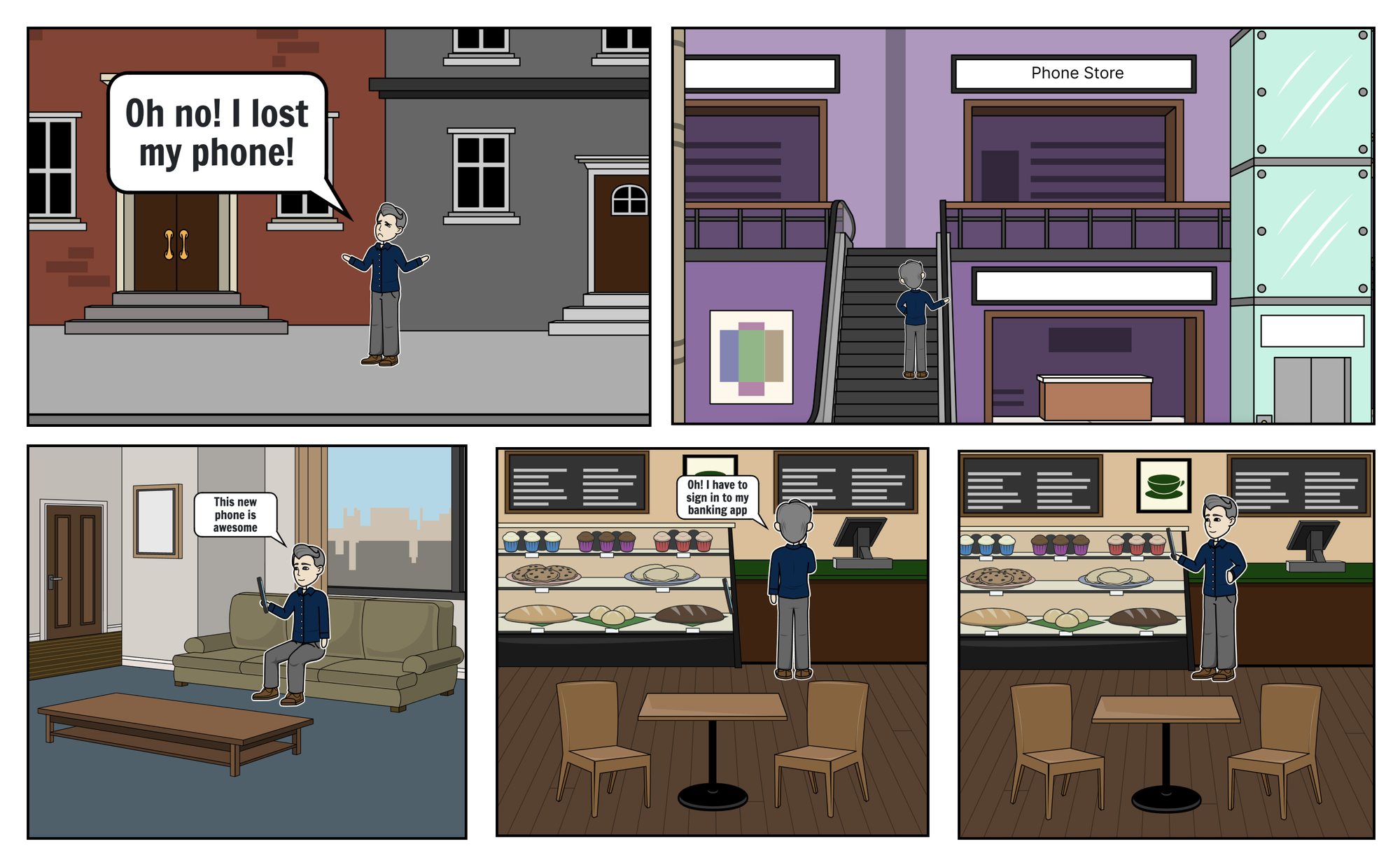
I started with a storyboard of one customer's bad day. Then I mapped each step of the current experience, with how it felt.
How I learned
Storyboard
A customer loses a phone, buys a new one, and gets stuck signing in at a café.
Journey mapping
Each step of the current experience, with an emotion curve and pain points.
How might we
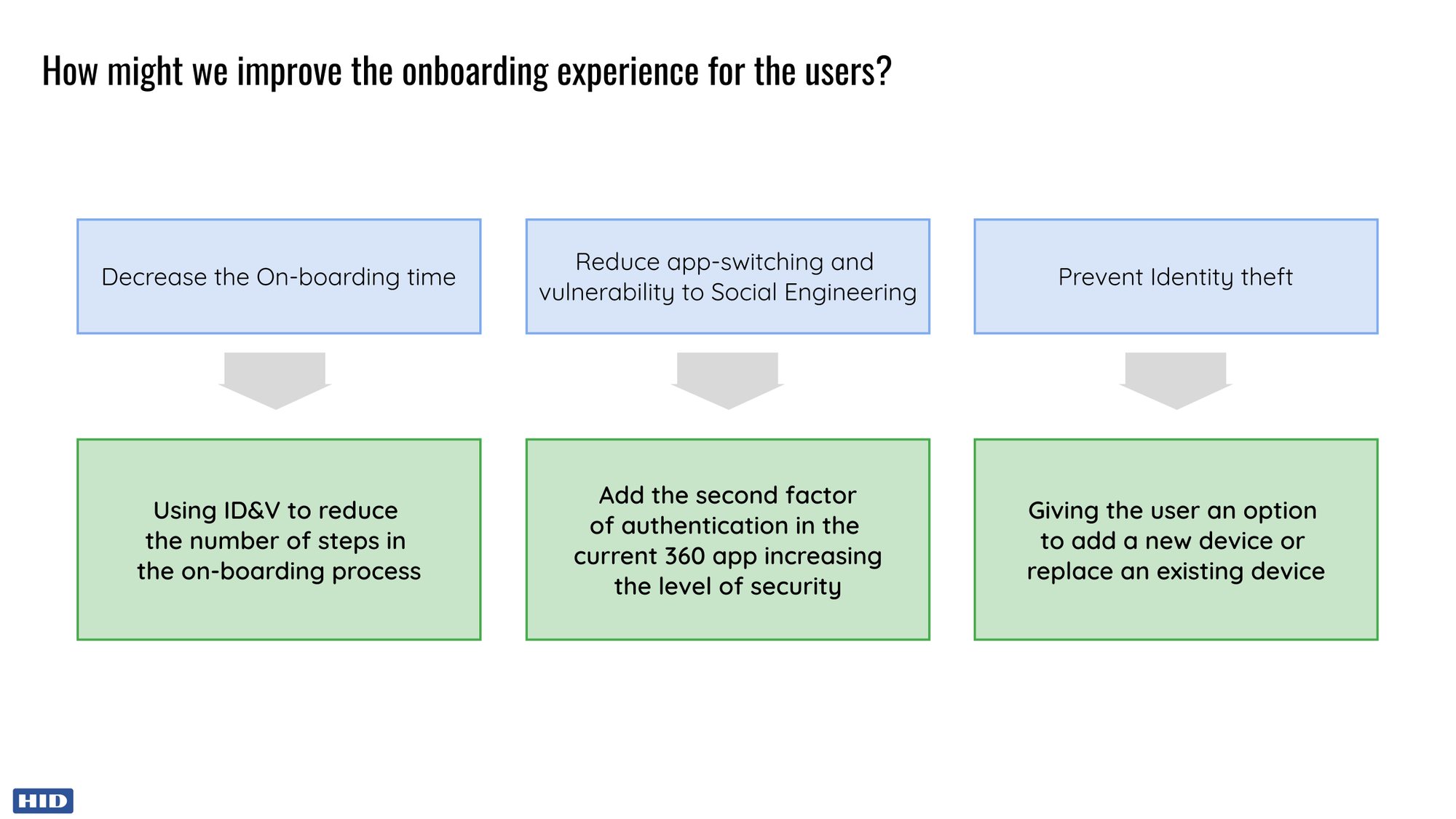
Pain points reframed as three goals for the new journey.
What I found
Finding 01
Onboarding was the low point.
- What I saw
- The emotion curve dropped after download and stayed low through user ID, date of birth, and the invitation code.
- What it changed
- Goal: decrease onboarding time by cutting steps.
Finding 02
App switching invited phishing.
- What I saw
- Opening email to find a code pulled the customer out of the app at the riskiest moment.
- What it changed
- Goal: keep the customer in one app, and add the second factor there.
Finding 03
Nobody cleaned up the old phone.
- What I saw
- Nothing prompted the customer to remove the lost device from the account.
- What it changed
- Goal: ask up front whether this is a new device or a replacement.
Research artifacts
Select an artifact to open it at full size.
Process
01Frame
- Storyboard
- Problem statement
Output. One clear brief the team could test ideas against.
02Map
- Current journey with an emotion curve
- Pain points under each step
Output. Where the experience dipped, and why.
03Reframe
- Three How might we goals
Output. Goals the client could weigh, before any solution.
04Propose
- A new journey
- Front-end and back-end touchpoints
Output. A pitch the bank could evaluate step by step.
Approach
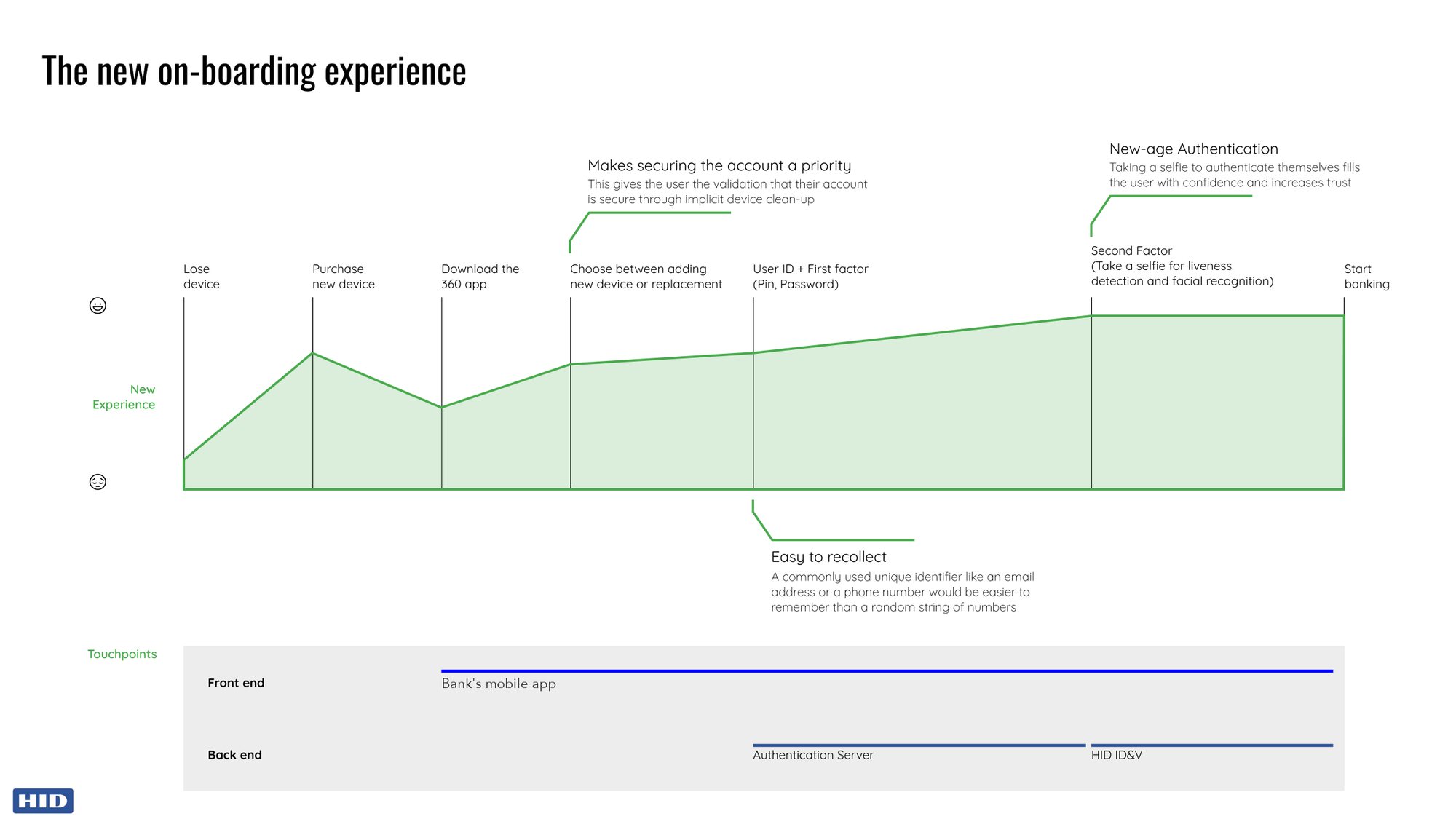
The proposed journey cut seven steps after download to three. The trade-off: the bank adds identity verification to its back end, and in exchange the customer never leaves the app.
Decisions
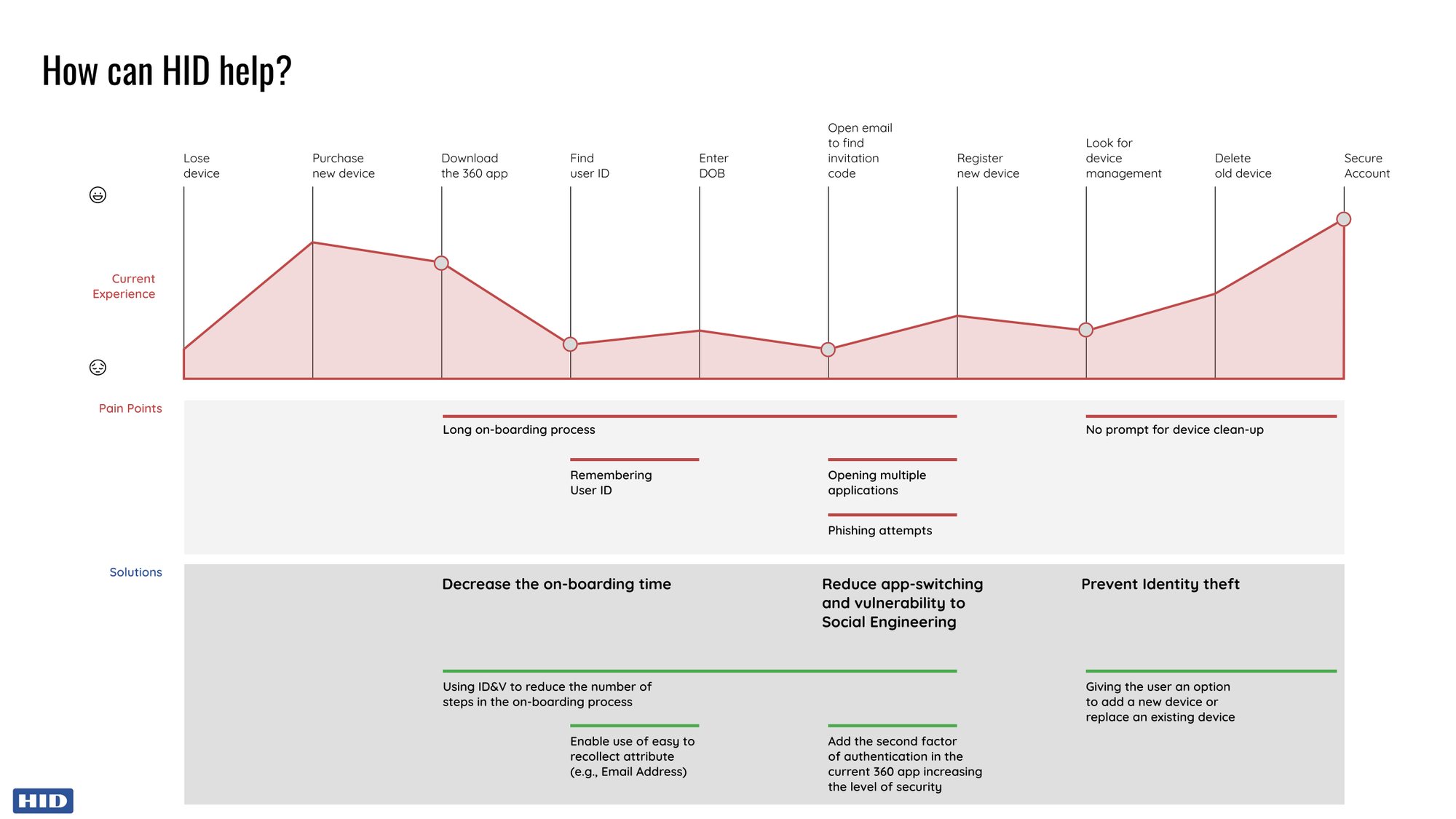
- Ask first: new device or replacement. A replacement removes the old phone automatically, so the account is secure from the start.
- Sign in with something people remember, like an email address or phone number, not a random ID.
- Take a selfie as the second factor, with liveness detection, inside the bank's app. No email, no code, no app switching.
Principles I used
Error prevention
Asking new or replacement up front removes the forgotten old phone.
Recognition rather than recall
An email address or phone number instead of a user ID nobody remembers.
Aesthetic and minimalist design
Three steps after download, down from seven.
Visibility of system status
The customer sees the account is secure before they start banking.
Outcome
- Status
- Pitched to the client as a concept journey.
- What it showed
- The journey map turned one brief into three goals the client could weigh. Speed, fewer app switches, and no stranded old phones.
- What I delivered
- Storyboard, current journey, How might we goals, solution mapping, and the proposed journey.
- What I'd do next
- Prototype the three-step path and test it with customers who recently replaced a phone.