Saffi: refillable olive oil dispenser
A graduate product design studio with a bulk-foods client. We did field research in Chicago grocery and co-op aisles. Then we designed three dispensers that had to be airtight, drip-proof, refillable, and dishwasher safe.
Studio project. Not a shipped commercial product.
- Contribution
- Ideation, research, 3D printing, prototyping, renders
- Type
- Product design, design research
- Tools
- Rhino, Keyshot, Grasshopper, Photoshop, Illustrator
- Class
- Product Design Workshop, with Saffi Foods as studio client
- Team
- Jeshwanth, Sahana, Chris
Context and brief
Saffi Foods was a Chicago startup that sold imported organic olive oil and seasonings in bulk. It sold through co-ops and organic grocers. The brief was a refillable home container for bulk olive oil. It had to attract shoppers, work in a real kitchen, and travel between store and home.
Requirements
- Airtight
- Watertight
- Drip-proof
- Easy to pour
- Dishwasher safe
- Refillable
- Fits the Saffi brand
Several of these conflict. A container that looks good on a counter rarely survives a dishwasher without dripping.
Field research
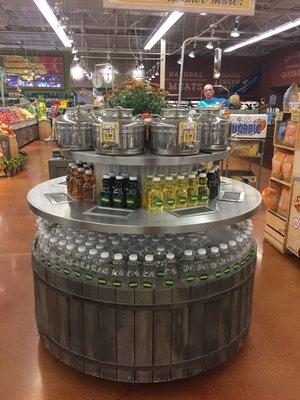
We visited grocery and home-decor stores, and stopped bulk shoppers for short interviews.
Visited: Whole Foods, SugarBeet Co-op, Dill Pickle Co-op, Fresh Thyme, Stanley’s, Eataly, Merchandise Mart.
In the aisle
- Bulk dispensers are built to look sanitary first.
- Open oils sit out for tasting next to the shelf.
- Shoppers match an oil’s origin to the cuisine they plan to cook.
- The shelf is already a sea of bottled options.
- Nothing on the floor was designed for refilling oil at home.
From shoppers
- Premium containers read as heavier and taller.
- Using and cleaning it has to take almost no effort.
- Oil lives on the counter, so the vessel has to be worth displaying.
Directions and testing
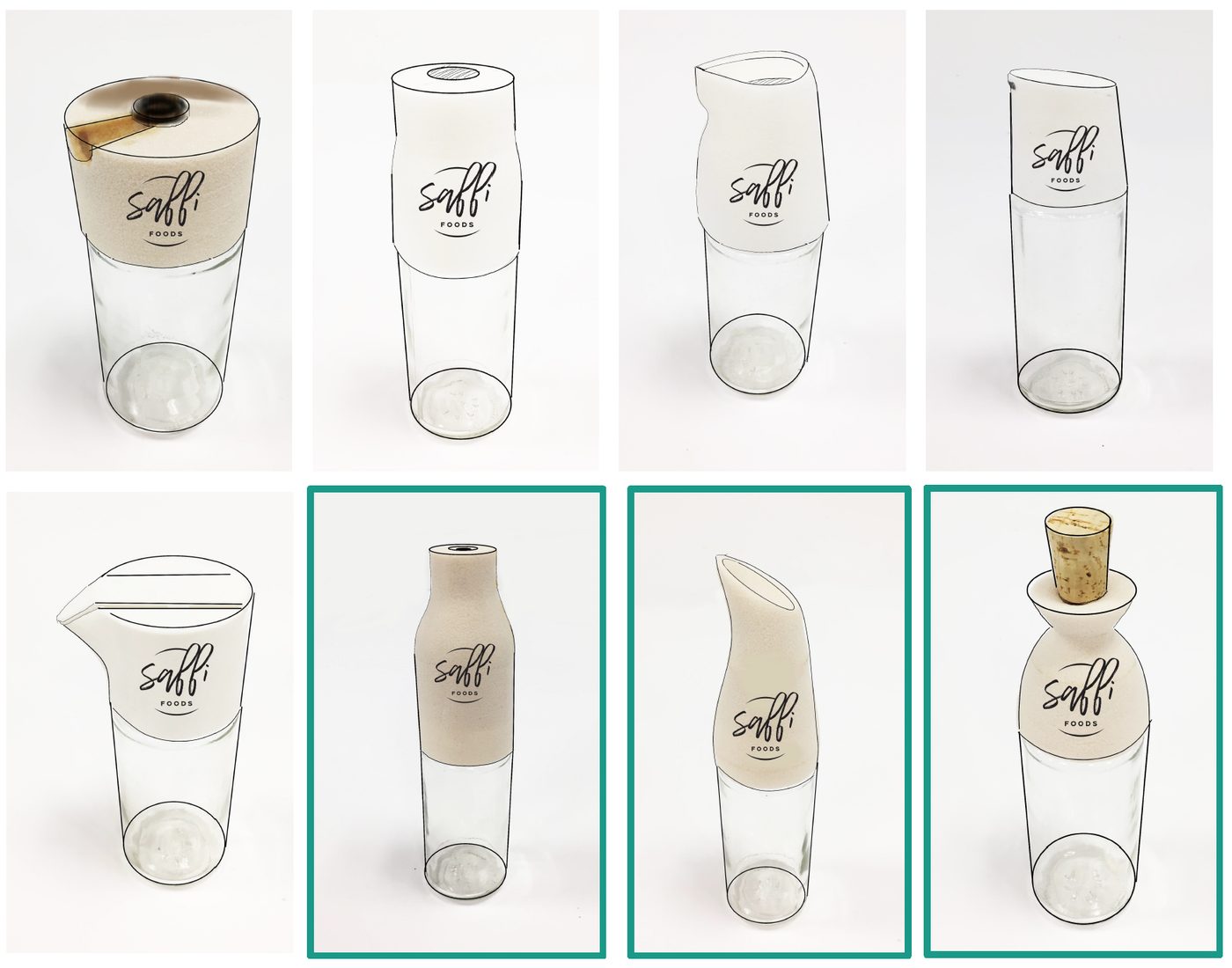
We sketched and modeled eight first-round forms, then took three forward.
Angled beak
A beak-shaped top for a controlled pour. It comes apart in two pieces for the dishwasher.
Wood, bamboo or metal
Open and closed
Lift the cap to unseal and pour. Press it down to reseal.
Wood or bamboo
Fill under the spigot
Fills straight from the store spigot. A twist cap opens a small hole for a finishing pour.
Wood, bamboo or plastic
Testing with prototypes
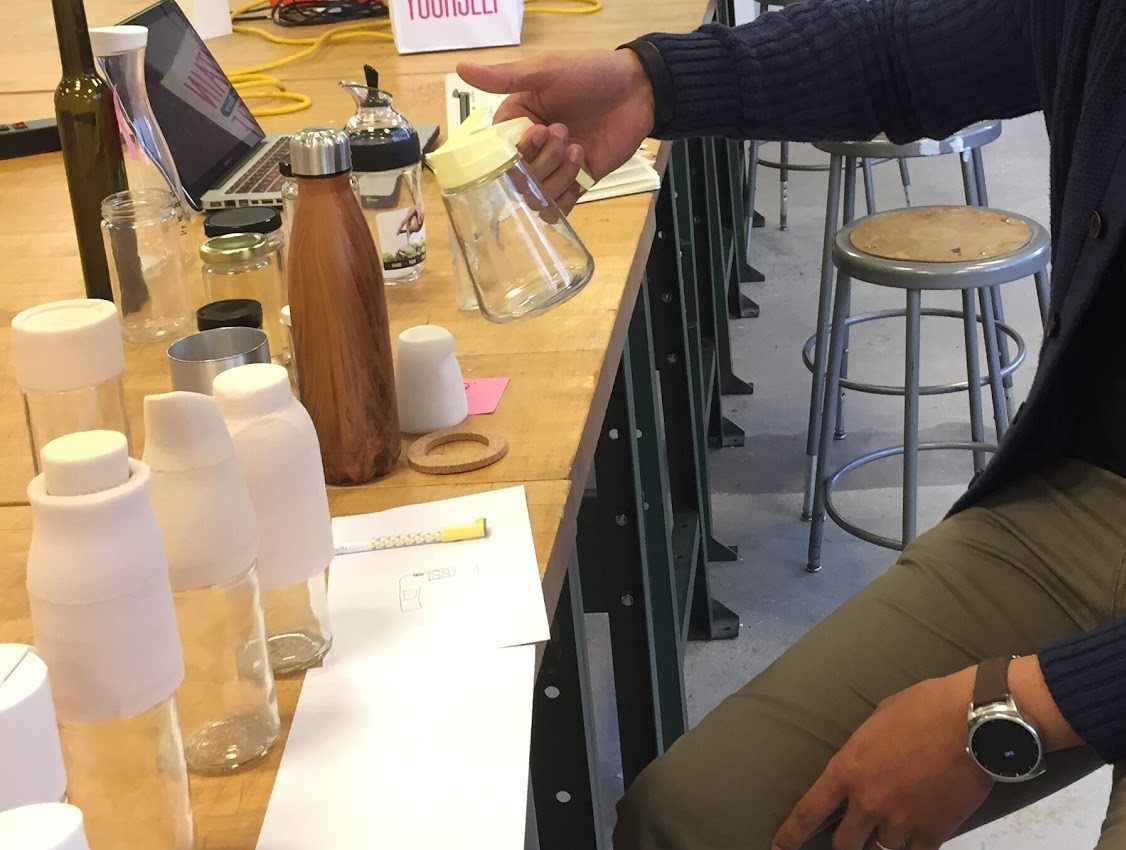
Niel Test participant
“How is this little jar my bulk purchase? Can I get an even bigger jar?”
“If this is premium oil, I would not want to waste even a drop of it.”
“A lot of these forms remind me of room fresheners.”
Materials they reached for: cork, wood
John Test participant
“Sustainability: heftiness of the material, to help it live long.”
“Plastic means free or cheap.”
Materials they reached for: bamboo, walnut
Moko Test participant
“I don’t use a lot of olive oil.”
“When I think of olive oil, I don’t think of a form. I just think of a color.”
“I don’t like any buttons in the design. Those are tough to clean.”
Materials they reached for: ceramic, silicone, glass
Niel liked twisting to widen the opening. He said see-through packaging feels premium.
Final concepts
Three final forms, compared side by side instead of pitched separately.

Swan
A flowing form that is easy to grip. A slider sets a low or high flow.
Materials. Stainless steel, bamboo or white ceramic
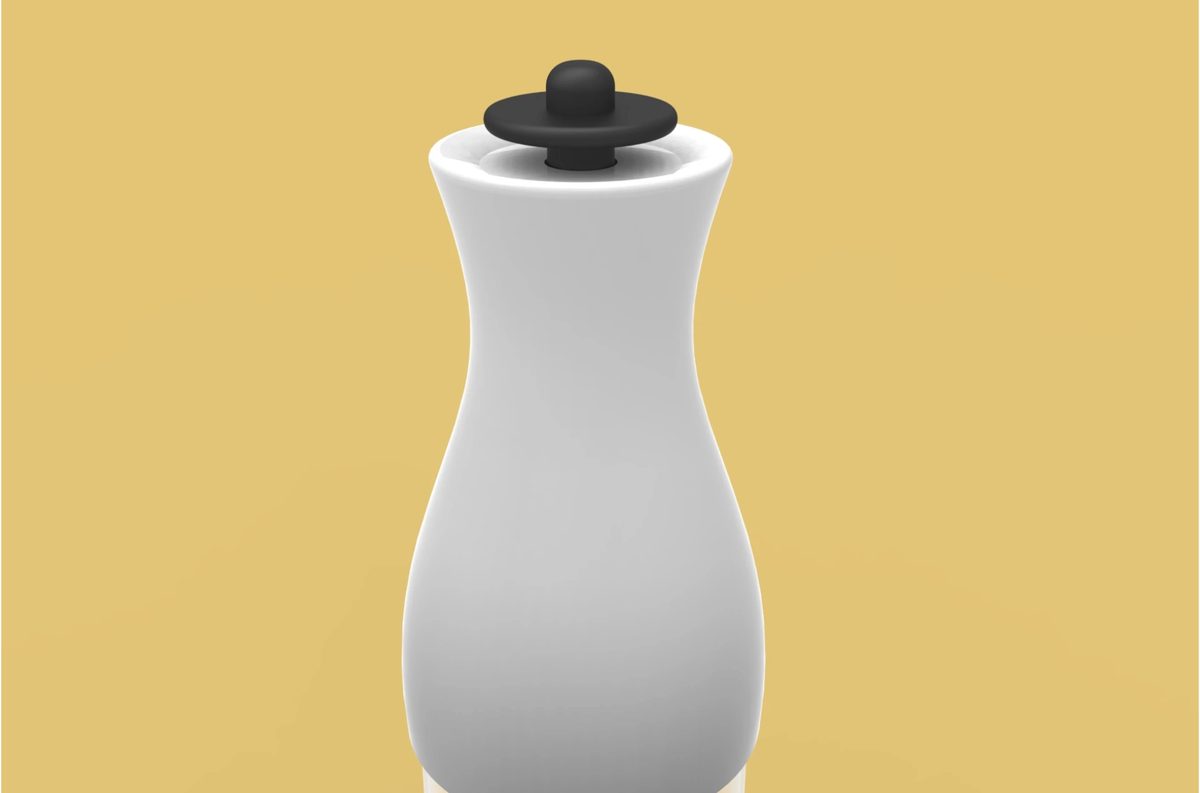
Ceramic
Pours in any direction. Pull up to open, push down to seal, with detents for low or high flow.
Materials. Stainless steel, wood or white ceramic
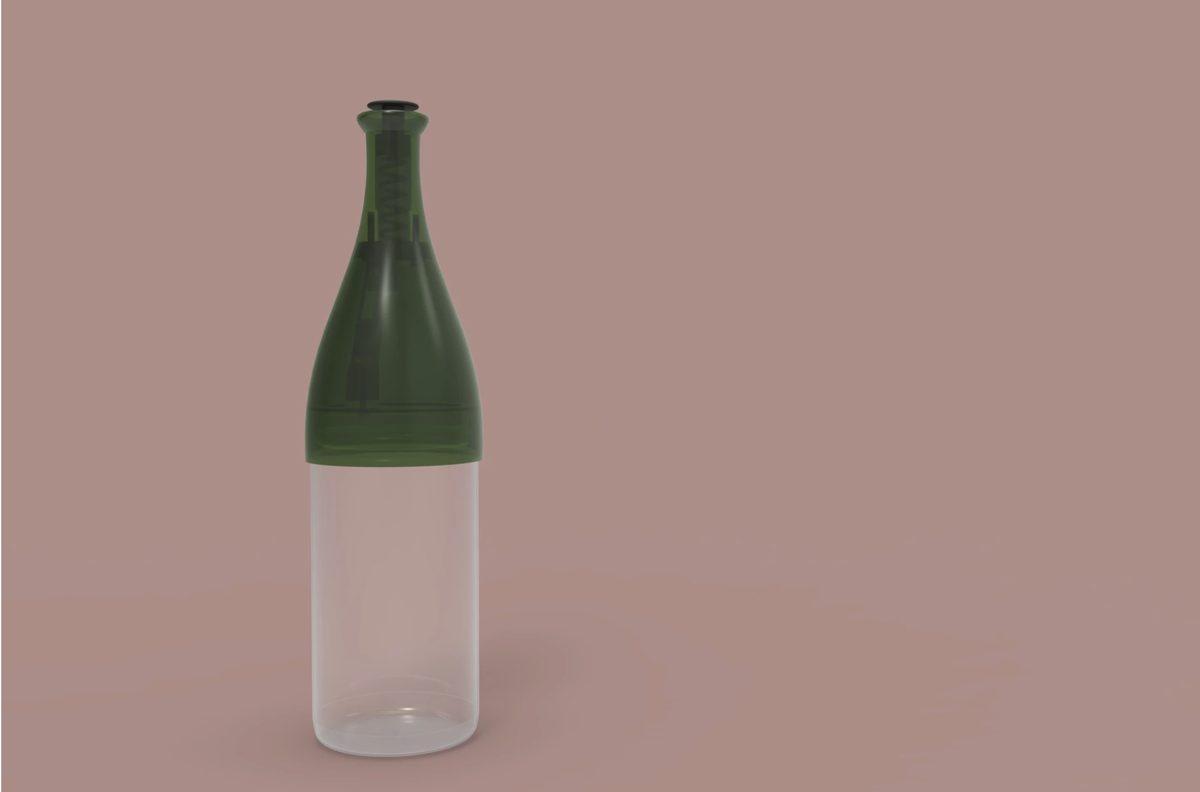
Wine
A slider on the side controls the pour. The shape borrows from a wine bottle.
Materials. Stainless steel, wood or bamboo
Next steps for the client: show the concepts to shoppers, store managers, and manufacturers, and pick one. Then refine, test, engineer, price, and find a manufacturer.
What I take from it now
Conflicting requirements, like looking good, surviving a dishwasher, and never dripping, have to be designed together, not as a shape.
People reject a form that looks like the wrong product. Reading as a room freshener or as cheap plastic killed a design.
Field visits beat desk research when a product has to work in a real aisle and on a real counter.